
At a glance: Barsana to Govardhan
The short road from Barsana can lead to very different Govardhan outings. A temple visit and a full parikrama need different plans. Choose the purpose before booking the vehicle, then agree where you will arrive, how the group will proceed and where the next transfer begins.
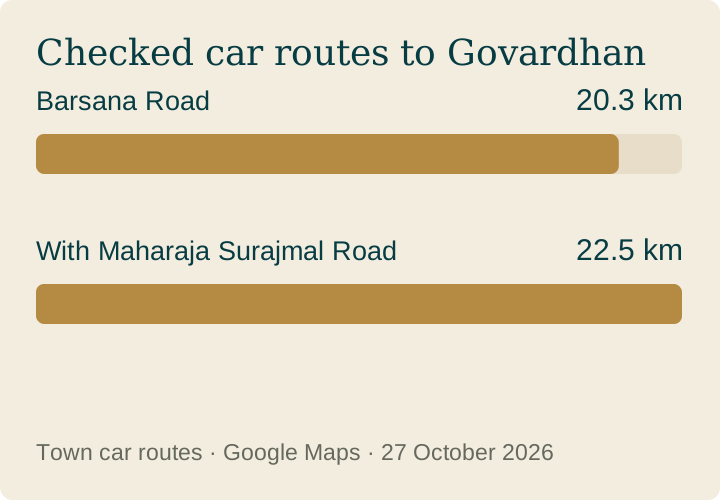
- The checked car routes measured 20.3 km via Barsana Road and 22.5 km via Barsana Road/Maharaja Surajmal Road. A particular temple, kund or pickup elsewhere needs its own pins.
- Govardhan, also written Goverdhan, has a district-listed twenty-one-kilometre parikrama circuit. That is separate from the drive from Barsana, and it does not supply a completion time for your group.
- Use around forty-five minutes to an hour for initial road planning and check traffic. Establish a first stop, the intended visit and a return or onward pickup. Avoid booking an undefined “Govardhan tour” when the group expects different experiences.
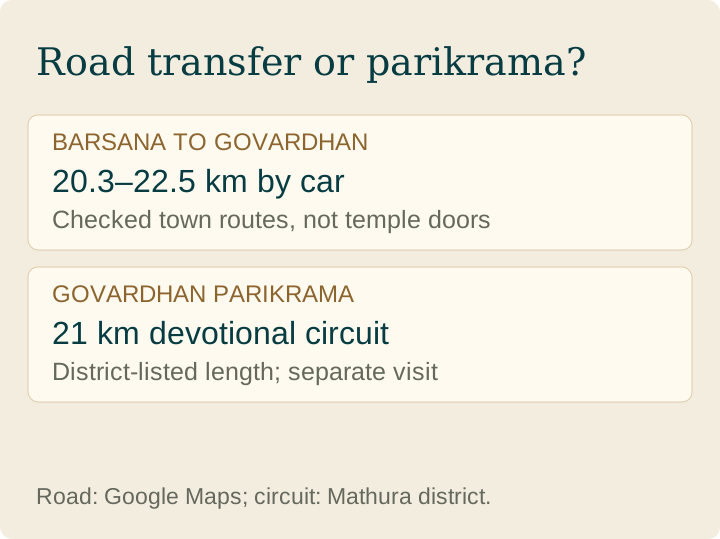
Barsana to Govardhan is about 20–23 km by car on the checked town-to-town routes. The shorter Barsana Road option measured 20.3 km; an alternative using Maharaja Surajmal Road measured 22.5 km. Decide whether you want a temple visit or Govardhan parikrama, because the separate 21 km circuit is additional to this transfer.
What is the Barsana to Govardhan road distance?
Barsana to Govardhan measured 20.3 km via Barsana Road and 22.5 km with Maharaja Surajmal Road in the checked car directions. About 20–23 km is a useful town-to-town range. Govardhan, also written Goverdhan, covers several possible stops, so replace the town pin with your actual first destination before booking.
Google Maps Driving mode, checked on 27 October 2026, displayed:
| Road option | Distance |
|---|---|
| Barsana Road | 20.3 km |
| Barsana Road and Maharaja Surajmal Road | 22.5 km |
Use forty-five minutes to an hour as an initial editorial allowance for the road, then recheck traffic. Getting back to your Barsana collection point and time spent visiting Govardhan are additional.
A small difference between road options should not distract from the destination. If the group wants Danghati, Radha Kund or Kusum Sarovar, name that place and ask about the current drop-off. Comparing a town transfer with a vehicle retained for several stops produces a misleading price comparison. Request the complete plan and agree which parts involve waiting or another local journey.
Is Govardhan parikrama included in that distance?
No. The road transfer brings you from Barsana to Govardhan; Govardhan parikrama is a separate devotional circuit there. The district lists that circuit as 21 km, or seven kos. Decide whether to undertake it or make a limited visit before setting the day's transport and onward connection commitments.
The district parikrama description names places including Danghati, Jatipura, Radha Kund, Mansi Ganga and Kusum Sarovar. These help identify parts of the area. They are not instructions to fit every stop into a brief afternoon after Barsana.
A kilometre count alone cannot establish how long your group will take. Confirm your intended starting point, way of proceeding, pauses and finish arrangement. This guide does not prescribe one completion time or certify a particular route's accessibility.
Discuss the plan before travelling if some people want the full circuit and others prefer a temple visit. Agree whether the group splits, where anyone waits and how everyone rejoins. That prevents the transport booking from depending on assumptions about other people's pace.
Our introduction to parikrama gives devotional context. Keep the circuit's purpose and the road logistics distinct: booking a car to Govardhan does not, by itself, arrange every part of the pilgrimage or the journey home.
How should you choose the first stop and pickup?
Choose the Govardhan visit you want, then arrange transport around that specific plan. A single temple drop-off, a vehicle waiting at several stops and a parikrama collection can involve different meeting points. Name the first destination and the final pickup, including what should happen if members of the group finish separately.
For a short visit, ask about the current approach to your chosen stop. For parikrama, establish where the vehicle will collect you afterwards rather than assuming you will return to the initial drop-off. A saved meeting location helps when several landmarks have been mentioned during planning.
If your Barsana visit has involved a substantial approach, check whether everyone still wants the longer Govardhan plan. A flexible second visit can be meaningful without turning it into a race through names. Keep an option to reduce the number of stops.
Agree waiting terms and the final destination with the driver. A return to Barsana is different from continuing to Mathura or a hotel elsewhere. Shared rides or buses need current boarding and return information; this article does not establish a fixed timetable or fare.
For a return to Barsana, our Govardhan to Barsana guide covers that direction. Check it using the actual collection point once your Govardhan visit is settled.
Frequently asked questions
How far is Govardhan from Barsana?
About 20–23 km by car between the named towns. The checked alternatives measured 20.3 km via Barsana Road and 22.5 km using Maharaja Surajmal Road as well.
Are Govardhan and Goverdhan different destinations?
They are spelling variants used for the same Braj destination in this guide. Confirm the actual temple, kund or meeting location rather than relying on the broad town name alone.
Does the road distance include the 21 km parikrama?
No. The district-listed parikrama is a separate circuit at Govardhan. Add the transfer from Barsana and any return or onward road journey independently.
How much time should I allow to reach Govardhan?
Forty-five minutes to an hour is initial editorial planning for the road. Recheck conditions and keep the visit, approach and return allowance separate.
Can I make a short visit without planning the full circuit?
Choose a named temple or stop, confirm its current approach and book the appropriate transfer. Make the limited visit explicit so the group and driver share the same expectations.